

Increasing Engagement and Effective Data Collection for the Boise State University Financial Wellness Program
Organization and Background
Boise State University (BSU) is a doctoral research institution serving 26,000 students from all 50 states and more than 60 countries. It offers 200 programs of study, including 14 doctoral programs, with a stated mission to provide a transformative and equitable educational environment that prepares students for success locally and globally. BSU's "Blueprint for Success" outlines strategic goals tied to that mission. The first priority is improving educational access and student success.
The Financial Wellness Program
The Financial Wellness Program is one concrete effort to advance the Student Enrollment and Retention Plan (SERP). Housed within Student Financial Services and connected to the university library and the Department of Student Affairs and Enrollment Management, its offerings aim to help students build financial confidence, reduce debt, manage financial stress, and develop money habits that extend beyond graduation.
Opportunity
Student financial stress is one of the most common reasons students leave college before finishing their degrees. At Boise State, in 2022, students who dropped out or stopped out due to financial pressures represented nearly $994,000 in lost revenue per semester. Those same students left with an average debt of $4,671 per semester. During the 2022-2023 school year alone, 952 freshmen had past-due balances ranging from $1,000 to $22,400.
The Financial Wellness Program exists to intervene before students reach that point. But since its launch in 2020, it has struggled to gain traction. The program is run entirely by one person and operates without a dedicated budget line. Funding comes through ad hoc expense requests, a reactive model that limits the program's ability to scale outreach or to maintain the technical infrastructure needed to track and serve students over time.
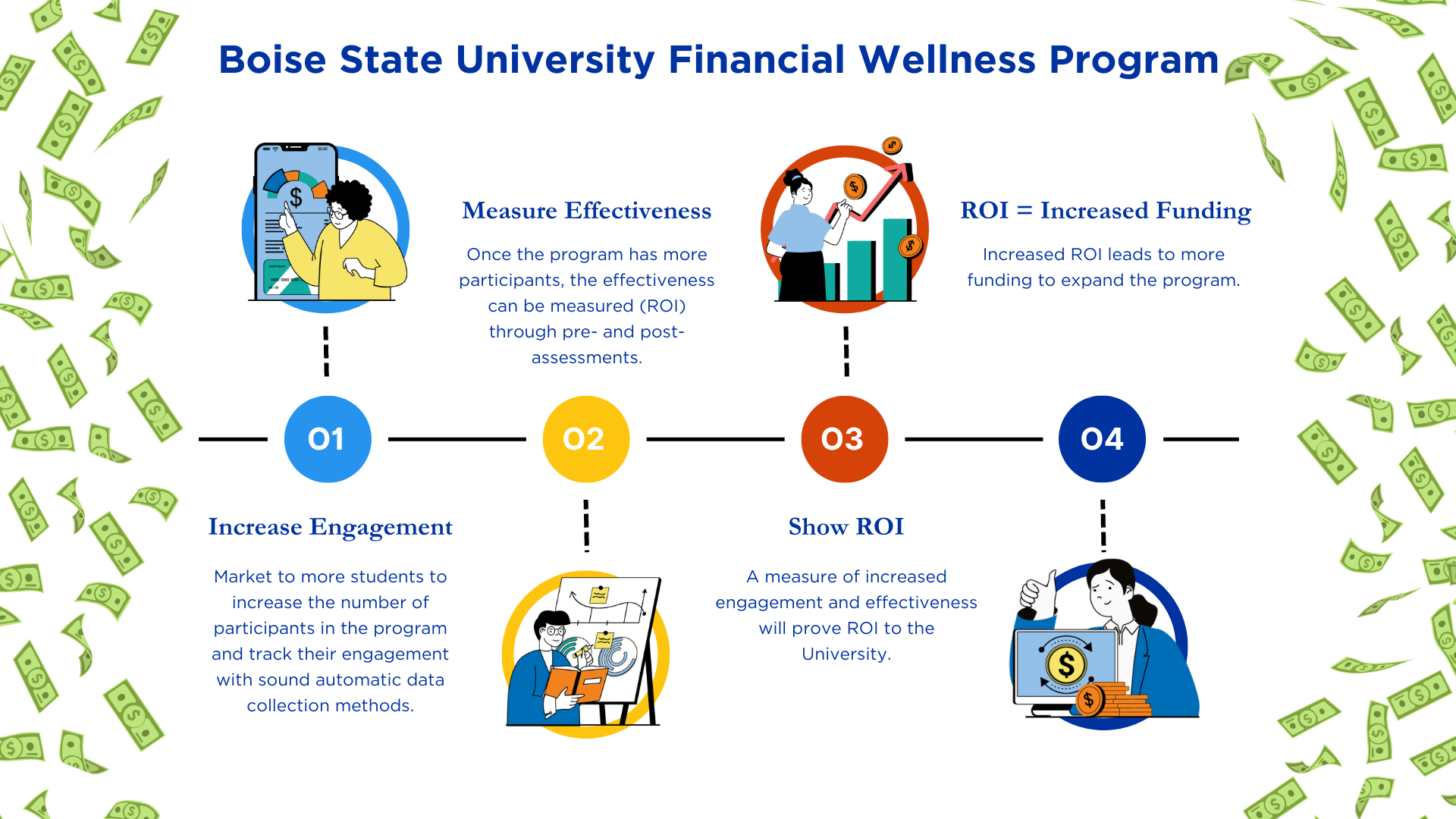
Addressing the program's performance and data-collection gaps is a prerequisite for demonstrating ROI that would support the university's broader financial health. The program’s coordinator estimated that a 14% increase in graduation rates among financially at-risk students would generate enough revenue to cover the cost of program expansion.
Figure 1
Financial Wellness Program Opportunities
Performance Gap and Analysis
The central performance gap is straightforward: the Financial Wellness Program cannot prove it works. Without data to show that the program reduces debt, alleviates financial stress, or improves student retention, the program coordinator cannot make a credible case for expanded funding or organizational support. To identify root causes, the team applied three complementary frameworks: Harless' Front-End Analysis (FEA), Chevalier's updated Behavior Engineering Model (BEM), and the Rummler-Brache 9-Box Model.
Harless’ Front-End Analysis
The FEA identified a concrete gap between the program's current state (cannot prove ROI) and its desired state (can prove ROI), which then guided the subsequent deeper cause analysis.
Environmental and Individual Causes: Chevalier’s Behavior Engineering Model (BEM)
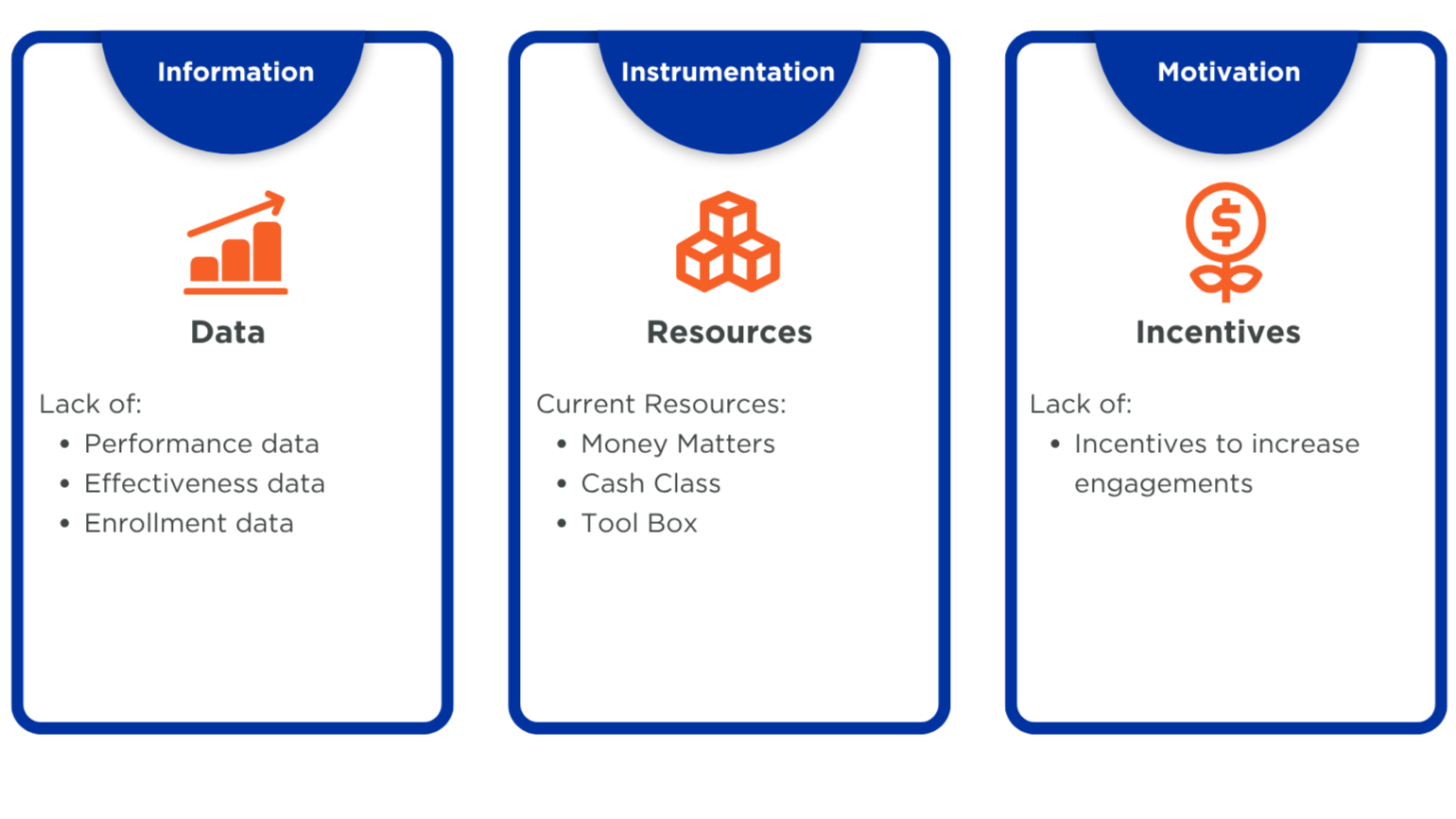
The team used the BEM to examine performance gaps at two levels: environmental and individual. At the environmental level, three gaps emerged. First, the program lacks data across the board: no engagement tracking, no enrollment records, no pre- or post-assessments. Second, while resources such as one-on-one advising and workshops exist, there are no systems in place to measure whether they're working. Third, the program's incentive structure isn't driving student participation, which compounds both problems.
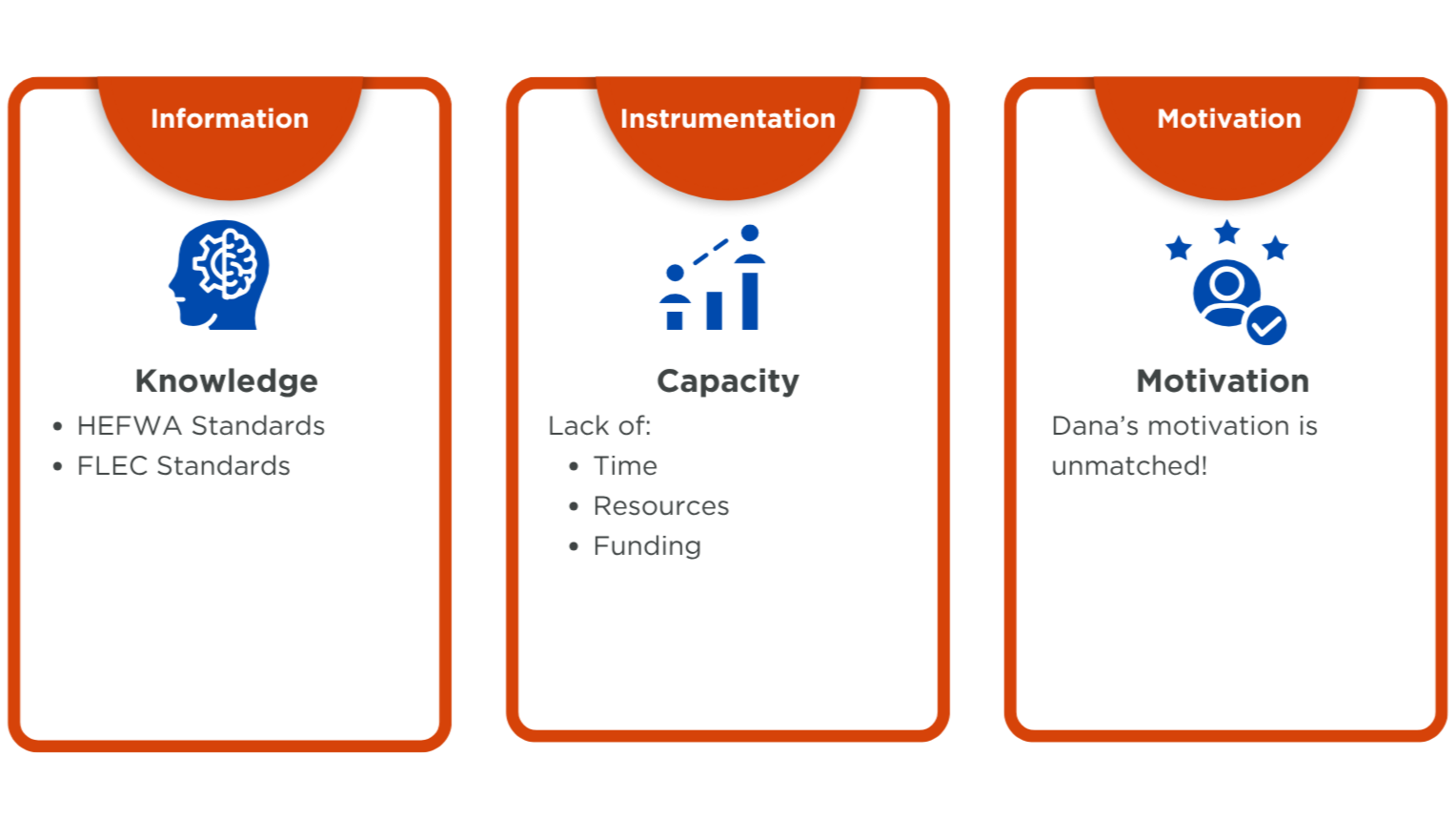
At the individual level, the program coordinator’s knowledge of financial wellness best practices is strong; she grounds the program in standards set by the U.S. Financial Literacy and Education Commission (FLEC) and the Higher Education Financial Wellness Association (HEFWA). Individual capacity was cited as a main gap.
Figure 2
Environmental and Individual Levels of Chevalier’s (2003) Updated BEM
Organizational Causes: Rummler-Brache 9-Box Model
The Rummler-Brache 9-Box Model examines performance across three levels: organization, process, and job/performer. Applied to the FWP, it revealed gaps at nearly every intersection. BSU's strategic goals, outlined in the Blueprint for Success and the SERP, align with the program's purpose on paper. In practice, the organization provides little structural support to help the program meet those goals. There are no documented data-collection processes, no engagement-tracking systems, and no formal integration with the university's broader student-success infrastructure. The program functions largely in isolation from the organizational systems that surround it.
Data Collection and Analysis Methods
Figure 3
Data Sources, Collection Methods, and Analysis Methods
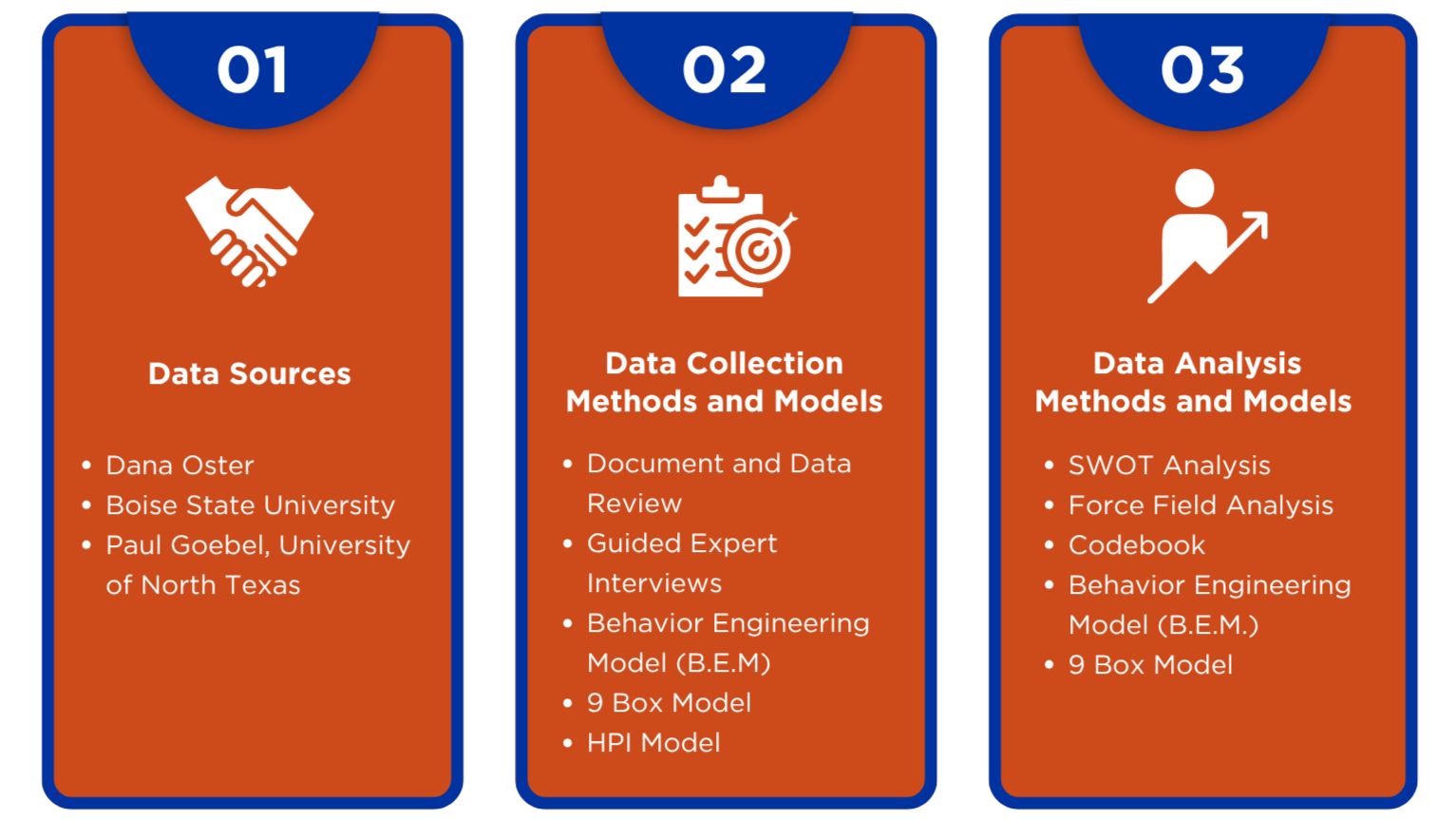
Primary data came from a series of in-depth interviews with the program coordinator, Dana, who provided detailed insights into program operations, current engagement levels, and her vision for expansion. The team also corresponded with Paul Goebel, founder and director of the Student Money Management Center (SMMC) at the University of North Texas, one of the highest-performing financial wellness programs in the country. Goebel's input provided a practical benchmark for what a well-resourced, institutionally supported program looks like in practice.
Extant data reviewed included the FWP Impact Report, the FWP Funding and Expansion Request, BSU's Blueprint for Success, the SERP, and the SMMC program playbook from UNT.
Transcribed interviews and extant data were coded using a shared codebook, with themes mapped to the BEM and 9-Box Model categories. This gave the team a consistent framework for sorting findings across environmental, individual, and organizational performance levels.
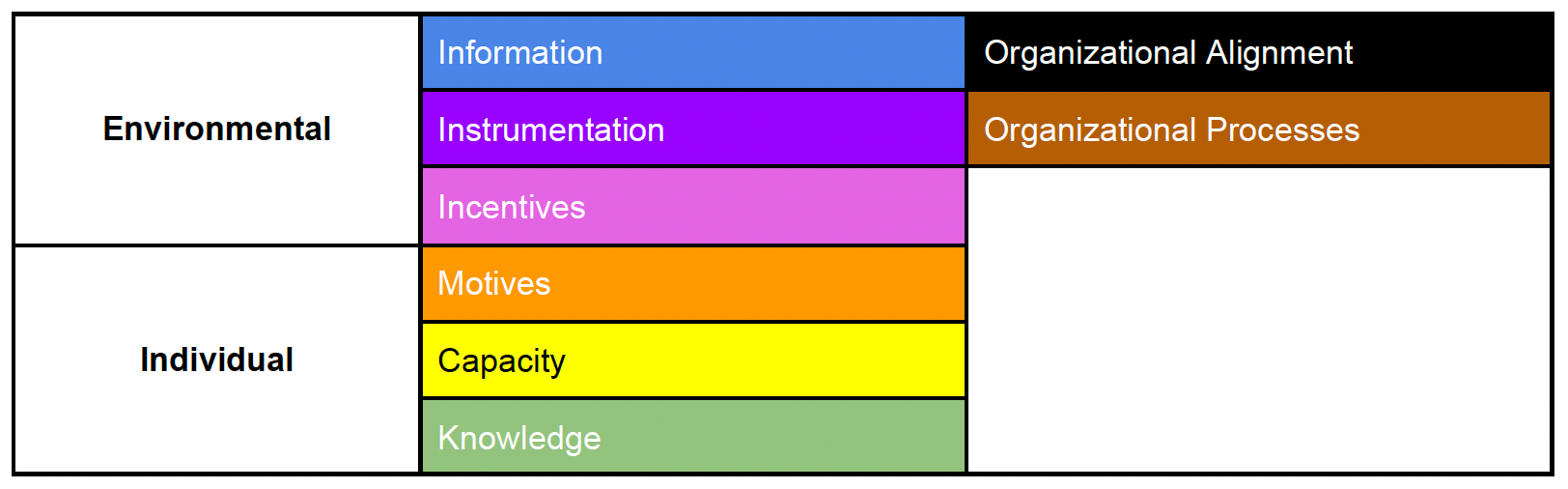
Table 1
Codebook Key
Findings and Recommendations
Figure 4
Interrelated Interventions
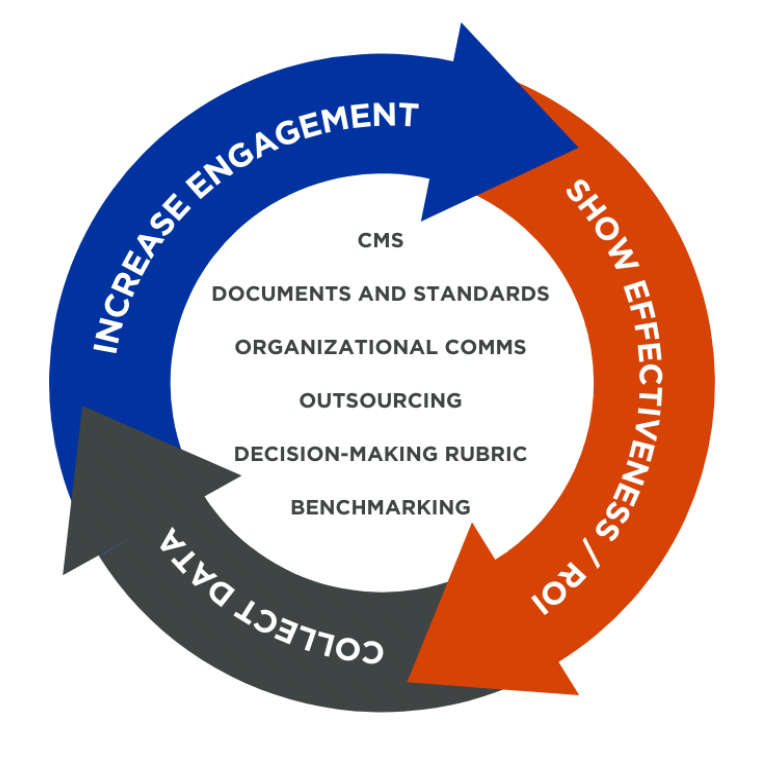
The assessment surfaced four interconnected problems: low student engagement, insufficient data collection, limited program capacity, and weak organizational support.
The team used Van Tiem's Intervention Selection Process (2012) alongside Hale's Family of Interventions (2006) to move from problem identification to prioritized action. Rather than chasing the most ambitious fixes, the team filtered options against a practical set of questions: Can it be automated? Will it drive engagement? Can it show ROI? Does it reduce Dana's load? Is it aligned with BSU's strategic goals and FLEC standards?
The result was a set of low- to no-cost interventions prioritized for feasibility and impact.
The Recommendations
The six prioritized recommendations are designed to work together, building the foundation the program needs before layering on more complex solutions.
Benchmarking: Use the SMMC as an ongoing reference point for data collection methods, program delivery, and performance goals. Dana has already received the SMMC playbook and established a connection with Goebel.
Decision-Making Rubric: Before adding any new program component, run it through a standard checklist: Can engagement be tracked automatically? Does it align with BSU's strategic goals and FLEC standards? Will it increase or decrease Dana's capacity? This simple filter prevents scope creep and keeps the program focused on what can actually be measured.
Organizational Communications: A targeted outreach strategy, including social media, the existing Call Campaign, and university events like new student orientation, can increase program visibility and bring more students into the pipeline. More participants mean more data.
Outsourcing via OPWL Partnerships: Partnering with BSU's Organizational Performance and Workplace Learning (OPWL) program gives Dana access to graduate students who can assist with instructional design, program evaluation, and content development at little to no cost.
Standardized Documentation: Documenting program processes, content, and delivery methods creates consistency, reduces Dana's cognitive load, and enables others to step in and support the program. A technical writer, sourced through an internship or university partnership, could produce a program playbook as a starting point.
Content Management System: Integrating the program into an existing LMS like Canvas or ensuring all web-based content is trackable through the current site provides Dana with automated data collection and analytics without building from scratch. BSU already has the infrastructure; it's a matter of connecting the program to it.
Limitations
Two limitations surfaced during the team’s needs assessment.
Access to Student Data
The most significant limitation is that the team was unable to collect data directly from students. Family Educational Rights and Privacy Act (FERPA) regulations prohibited the team from conducting interviews, surveys, or focus groups with students who had participated in the Financial Wellness Program. As a result, the assessment relies almost entirely on Dana’s perspective and existing program documentation to characterize the student experience.
Students are the program's primary stakeholders. Without their input, it's difficult to know whether the program's offerings are landing, what barriers prevent engagement, or what financial concerns are most pressing for BSU's student population. The findings and recommendations are well-grounded, but the team noted they would be stronger with student voices in the mix.
Scope Was Limited to the Program Level
The assessment focused primarily on the Financial Wellness Program itself. While the team examined organizational support at the process level, a deeper look at systemic issues within Student Financial Services and the broader university structure was outside the scope of this project.
Reflection
Financial literacy is something I care about deeply, so this project felt meaningful from the start. What I didn't anticipate was how much it would shift my thinking about the relationship between a program and the institution surrounding it. The Financial Wellness Program existed largely in isolation from the university systems designed to support it, and that disconnect between stated priority and actual organizational support was striking. It's also where the Behavior Engineering Model clicked for me in practice in a way it hadn't in theory. The hardest lesson was about data. Relying heavily on a single stakeholder, one who was deeply invested in a program she built, reinforced why gathering multiple perspectives is not just a methodological preference but an ethical one. A single voice, however honest, is still just one voice. This was my first project at Boise State, and it raised the bar for what I understand performance consulting work can actually accomplish in the world.
References
Oster. (2023). Funding Expansion Request. [PDF]
Boise State University website. (2024).
Chevalier, R. (2003). Updating the behavior engineering model. Performance Improvement, 8-14.
Christensen, B. D. (2018). From Needs Assessment to Needs Analysis. Performance Improvement, 57(7), 36–44. https://doi.org/10.1002/pfi.21785
Hale, J. (2006). The performance consultant's fieldbook: Tools and techniques for improving organizations and people (2nd Ed. ed.). Pfeiffer.
Harless, J. H. (1987). An analysis of front-end analysis. Performance Improvement, 26(2), 7–9. https://doi.org/10.1002/pfi.4160260204
International Society for Performance Improvement. (n.d.). Code of Ethics. Retrieved January 31, 2024, from https://ispi.org/general/custom.asp?page=CodeofEthics
Lewin, K. (1947). Frontiers in group dynamics: Concept, method, and reality in social science, social equilibria, and social change. Human Relations, 1, 5–41.
Rothwell, W. J., Hohne, C. K., & King, S. B. (2018). Human performance improvement: Building practitioner performance (3rd ed.). Routledge.
Rummler, G. A., & Brache, A. P. (2013). Improving performance: How to manage the white space on the organization chart. Jossey-Bass.
University of North Texas Website (2022).
Van Tiem, D. M., Moseley, J. L., & Dessinger, J. C. (2012). Fundamentals of performance improvement: Optimizing results through people, process, and organizations: Interventions, performance support tools, case studies (3rd ed.). Pfeiffer
Appendices
Note: Permission to reference the project sponsor and associated organizational group has been granted for the purposes of this portfolio. All information included reflects approved use and adheres to the confidentiality guidelines established for the project.